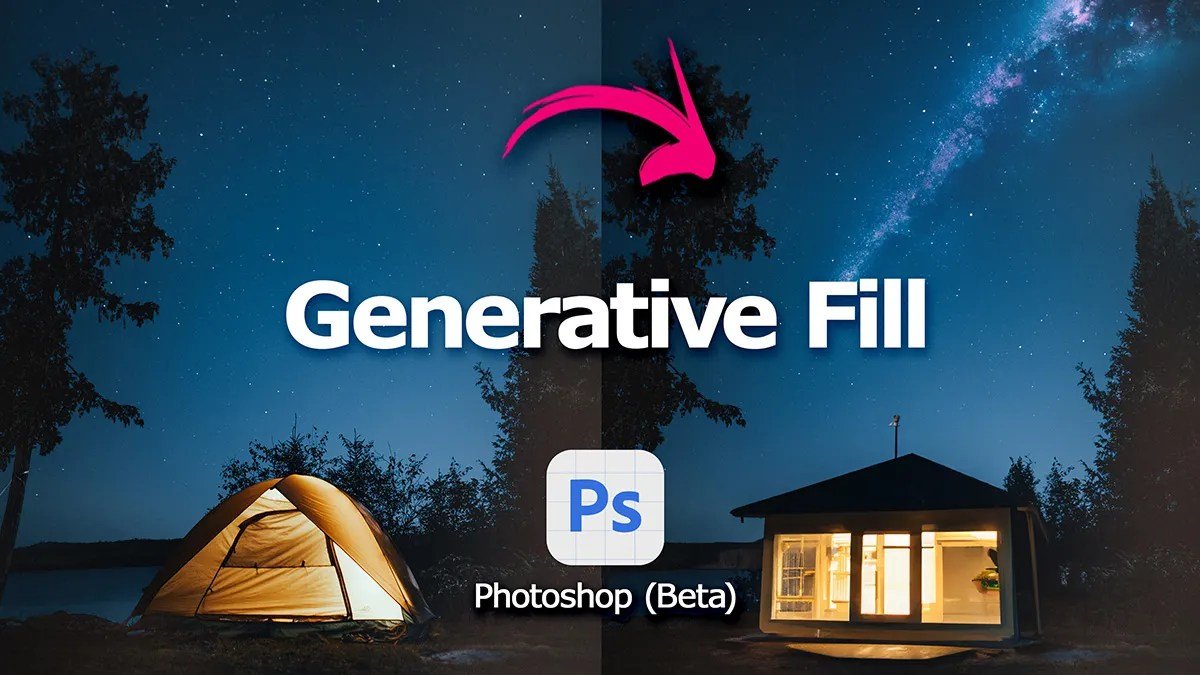
The siren call of Adobe Photoshop's Generative Fill is undeniable. This revolutionary AI feature, powered by Adobe Firefly, has reshaped how creators approach image editing, making complex manipulations seem effortlessly simple. But if you’re navigating the world of cracked Photoshop versions, the quest for [Identifying Compatible Cracked Photoshop Versions for Generative Fill] can feel like a relentless game of cat and mouse – often ending in frustration.
We're going to dive deep into why this feature is so elusive in non-legitimate versions, what limited possibilities might exist, and, crucially, what realistic expectations you should set. This isn't just about finding a download; it's about understanding the fundamental conflict between a cloud-dependent AI and software designed to operate offline.
At a Glance: Generative Fill in Cracked Photoshop
- Cloud-Dependent: Generative Fill requires a constant internet connection to communicate with Adobe's Firefly AI servers.
- Crack Conflict: Most cracked Photoshop versions block connections to Adobe servers to prevent activation checks, inadvertently disabling Generative Fill.
- Adobe ID Essential: Even if a cracked version could connect, Generative Fill also requires an Adobe ID and uses AI "credits" tied to a legitimate subscription.
- No Stable Solution: There's currently no widely stable or guaranteed cracked version that consistently enables Generative Fill due to Adobe's active countermeasures.
- High Risk: Attempting workarounds or using dubious cracked versions carries significant security risks (malware, data theft).
- Evolving Target: Adobe constantly updates its security and Generative Fill service, making any "fix" short-lived.
The Irresistible Pull of Generative Fill: Why Everyone Wants In
Let's be clear: Generative Fill is a monumental leap in creative technology. Imagine extending a photo's background with AI-generated content that seamlessly blends with the existing image, or removing objects and having the AI intelligently fill in the gaps. Want to add a mountain range to a barren landscape or swap out a dog for a cat? Generative Fill does it with startling accuracy and artistic flair, all with simple text prompts.
This isn't just a gimmick; it's a powerful tool that saves hours of manual work, democratizing advanced photo manipulation for users of all skill levels. It empowers experimentation, accelerates workflows, and often produces results that are indistinguishable from painstakingly crafted edits. The desire to wield such a potent tool, even outside the bounds of a paid subscription, is perfectly understandable.
The Elephant in the Room: How Generative Fill Actually Works (and Why Cracks Struggle)
Here’s the core of the problem: Generative Fill isn't a feature that lives entirely within your downloaded Photoshop application. It's a prime example of a cloud-based AI service. When you use Generative Fill, your Photoshop application acts as an interface, sending your image data and text prompts up to Adobe's powerful Firefly AI servers. These servers process your request, generate the content, and then send the results back down to your Photoshop application for you to review and integrate.
This constant, two-way communication with Adobe's servers is non-negotiable for Generative Fill to function. It's not just about downloading a database of images; it's about real-time computation performed remotely.
The Crack's Dilemma: Blocking for Freedom, Disabling for Functionality
The entire premise of a "cracked" or "pirated" version of Photoshop is to bypass Adobe's licensing and activation checks. This is typically achieved by:
- Modifying Program Files: Altering the application code to trick it into believing it's activated.
- Host File Manipulation: Redirecting Adobe's authentication servers to a local, non-existent address (effectively blocking communication).
- Firewall Rules: Setting up rules to prevent Photoshop from connecting to specific Adobe domains.
While these methods successfully prevent Photoshop from detecting an invalid license and demanding payment, they create a critical side effect: they also block the very same connections that Generative Fill needs to talk to the Firefly AI servers. It's like cutting the internet cable to avoid paying your bill, only to realize your streaming service also needs that cable.
The Hard Truth: Why "Fully Cracked" Often Means "No Generative Fill"
Based on extensive user experiences, including discussions on forums like Reddit, the consensus is stark: most traditional cracked Photoshop versions simply do not support Generative Fill. Users frequently report issues such as the Generative Fill option being grayed out, error messages about server connectivity, or the feature simply failing to produce any results.
The popular "Jack Sparrow" or "Monkrus" versions, while excellent for providing a fully offline Photoshop experience, are designed to completely sever ties with Adobe's online services. This comprehensive blocking is precisely what makes Generative Fill inoperable. As one Reddit user succinctly put it, "This version of photoshop cant be cracked or maybe generative fill cant be used on crack... [it requires] internet connection." This highlights the fundamental incompatibility. The crack achieves its primary goal (bypassing activation) by sacrificing the very thing Generative Fill needs (cloud connectivity).
The Adobe ID Conundrum
Even if you managed to find a way to let a cracked version communicate with Adobe's Generative Fill servers (a huge "if"), you'd hit another wall: Adobe Generative Fill requires an active Adobe ID and operates on a credit system. Legitimate users receive a certain number of monthly generative credits with their Creative Cloud subscription. These credits are consumed each time you use Generative Fill.
A cracked version doesn't provide you with a legitimate Adobe ID or the associated credits. So, even if the connection issue were miraculously solved, you'd likely be rejected at the next step, as Adobe's servers wouldn't recognize you as an authorized user with available credits. This is a crucial distinction: it's not just about accessing the feature, but about paying for the AI processing power behind it.
Navigating the Gray Area: What Might Work (and What to Expect)
Despite the overwhelming odds, some users are always looking for ingenious workarounds. It's a constant cat-and-mouse game between Adobe's security and the cracking community. However, any "solutions" in this space are highly unstable, short-lived, and come with significant caveats.
The "Hybrid" Approach: Selective Server Blocking
A theoretical approach might involve selectively allowing some Adobe connections while blocking others. This would entail:
- Advanced Firewall Rules: Meticulously configuring your firewall to permit traffic only to specific Adobe domains related to Generative Fill, while blocking all others used for licensing.
- Host File Editing: Carefully adding entries to your host file to redirect known licensing servers to
127.0.0.1(localhost), but leaving the Generative Fill server domains untouched.
Why this is incredibly difficult and unstable:
- Obscure Server Addresses: Adobe doesn't publicly disclose the exact server addresses for Generative Fill. Identifying them reliably is a huge challenge.
- Dynamic IPs: These server addresses can change frequently, rendering your carefully crafted firewall rules or host file entries obsolete overnight.
- Dependency Tree: Generative Fill might rely on other Adobe services (e.g., user authentication, data transfer services) that are also typically blocked by cracks. Unblocking Generative Fill could inadvertently re-enable activation checks.
- Security Risk: Messing with network configurations without expert knowledge can open up your system to vulnerabilities or break other legitimate software.
For those interested in the technical dance involved in trying to make things work, exploring specific methods for activating Generative Fill in cracked Photoshop often highlights the intricate and often futile struggle against Adobe's server-side logic.
Specific Version Hunting: A Moving Target
Another common tactic is to search for specific, older cracked versions of Photoshop that might have briefly allowed Generative Fill before Adobe patched the loophole.
- The Window of Opportunity: When Generative Fill was first released (e.g., in Photoshop 24.5, 24.6, and later as stable features), there might have been a brief period where a crack emerged that didn't fully block the necessary connections, or Adobe's authentication for Generative Fill wasn't as stringent.
- The Futility: These windows are notoriously short. Adobe's teams are incredibly proactive in closing security gaps and tightening access to their cloud services. By the time a "working" cracked version is widely distributed, it's often already obsolete.
- Security and Stability: Chasing outdated, potentially vulnerable software versions is a bad idea. They won't receive security updates, may have critical bugs, and will likely break with future operating system updates. Moreover, downloads from unverified sources are a prime vector for malware.
Recommendation: While it's tempting to look for a magical "working" version, this approach is largely a waste of time and significantly increases your security risk. The nature of cloud-based AI means the server-side rules dictate functionality, not just the local application.
Key Considerations for Your Search: Setting Realistic Expectations
If you're still determined to explore options, keep these critical factors in mind:
- Photoshop Version Number: Generative Fill was initially released in beta in Photoshop 24.5 (May 2023), then became a stable feature in Photoshop 24.6 and subsequent versions (e.g., Photoshop 25.x, Photoshop 2024). Any version older than 24.5 simply will not have the Generative Fill feature, cracked or not. Focus your search on versions 24.5 or newer.
- The Crack Method: Understand the type of crack. "Offline-only" cracks that aggressively block all Adobe connections are highly unlikely to ever support Generative Fill. You'd need a more sophisticated, "partial" crack that intelligently allows only the Generative Fill connections, which are exceedingly rare and difficult to maintain.
- Source Reliability: This cannot be stressed enough. The internet is rife with malicious actors. Fake "cracks" are a common way to distribute malware, ransomware, and spyware. If a source promises a "fully working Generative Fill crack," exercise extreme caution and skepticism. Your data and system security are at stake.
- The Internet Connection Requirement: This is non-negotiable. If your cracked Photoshop version is designed to run completely offline (which most are, to avoid detection), Generative Fill will not work. You need some level of permitted internet connectivity for the feature.
- AI Credit System: Even if you somehow managed to bypass connectivity and authentication, you still wouldn't have Adobe AI credits. It's like having a car but no gas. The generative power is not free, even for legitimate users.
The Evolving Landscape: Why This is a Constant Battle
Adobe, like any software company, is constantly working to protect its intellectual property and the integrity of its subscription model. This means:
- Ongoing Security Updates: Adobe regularly updates its Creative Cloud applications and backend services to detect and counter new cracking methods.
- Server-Side Changes: The Generative Fill service itself is evolving. Adobe can change server endpoints, authentication protocols, and credit validation systems at any time, instantly breaking any current workaround.
- AI Development: Generative Fill is powered by Firefly, which is under continuous development. New features, improved models, and bug fixes are pushed out frequently, requiring a constant online connection to receive these updates. An offline cracked version will quickly become outdated and miss out on these advancements.
This dynamic environment makes finding a truly stable, long-term solution for Generative Fill in a cracked Photoshop version nearly impossible. You're essentially trying to hit a moving target that's constantly being redesigned.
Common Questions & Misconceptions About Generative Fill and Cracked Photoshop
Let's clear up some lingering doubts you might have.
"Why did Generative Fill stop working on my cracked Photoshop?"
The most likely reason is that Adobe released an update (either to Photoshop itself or to its backend servers) that patched the method your crack was using to bypass activation or communicate with its services. What worked yesterday might not work today, demonstrating the unstable nature of such workarounds.
"Can I just use a VPN to get Generative Fill working on my cracked version?"
No, a VPN (Virtual Private Network) won't solve this problem. Generative Fill issues aren't about geographical restrictions or IP blocking for legitimate users. The issue is that the cracked software itself is designed to prevent communication with Adobe's authentication and cloud servers. A VPN changes your perceived location but doesn't alter the software's internal blocking mechanisms or provide you with legitimate Adobe ID and credits.
"Are there 'special' cracks specifically for Generative Fill?"
While some cracking groups might claim to offer such specific versions, these are rare, highly experimental, and often short-lived. They carry a much higher risk of containing malware due to their niche nature and the difficulty in verifying their legitimacy. A "special" crack would need to be incredibly precise in what it blocks and what it allows, a feat that's difficult to maintain against Adobe's constant updates.
"Do I need an Adobe account for Generative Fill, even with a crack?"
Yes, absolutely. Even if you bypassed all other hurdles, Generative Fill requires an Adobe ID because it operates on a system of "generative credits." These credits are tied to a legitimate Adobe account and subscription. Without an active Adobe ID that has available credits, the Firefly AI servers will reject your request for generative content. This is a fundamental layer of Adobe's service, not something a software crack can bypass.
Beyond the Crack: Legitimate Alternatives for Generative AI
If your primary goal is to leverage generative AI for image editing and you're finding the cracked Photoshop route too frustrating or risky, consider these legitimate alternatives:
- Adobe Photoshop (Legitimate Subscription): The most straightforward way to access Generative Fill with full functionality and ongoing updates is through a paid Creative Cloud subscription. Adobe offers various plans, including the "Photography Plan" which includes Photoshop and Lightroom, often at a more affordable rate than the full Creative Cloud suite.
- Adobe Express: This is a web-based and mobile app from Adobe that offers simpler AI tools, including text-to-image and generative fill-like features, often with a free tier and a more accessible premium plan.
- Other AI Image Editors:
- Canva Pro: Includes "Magic Edit" and other AI design tools that can perform similar tasks to Generative Fill, though perhaps not with the same granular control as Photoshop.
- Midjourney / DALL-E 3 / Stable Diffusion: These are powerful text-to-image AI generators. While not integrated into a traditional image editor like Photoshop, they can generate initial images that you can then refine in a basic image editor (like GIMP or even an older cracked Photoshop if you choose).
- GIMP with AI Plugins: The free and open-source GIMP image editor is constantly evolving, and community-developed AI plugins are emerging, although they might not yet match the sophistication of Adobe's Firefly.
Exploring these avenues might offer a more reliable, secure, and less frustrating path to incorporating generative AI into your creative workflow.
Your Next Steps: Realistic Expectations and What to Do
The reality of [Identifying Compatible Cracked Photoshop Versions for Generative Fill] is sobering: it’s an uphill, often fruitless battle against a robust, cloud-dependent system. The fundamental conflict between a crack (which blocks Adobe servers) and Generative Fill (which relies on them) remains insurmountable for most users.
If your creative work absolutely depends on Generative Fill, the most reliable and secure path forward is to consider a legitimate Adobe Creative Cloud subscription. While there's an associated cost, it guarantees access to the latest features, security updates, cloud services, and the peace of mind that comes with legal, functional software.
For those still hoping to find a workaround, understand that any "solution" will be temporary, highly unstable, and carry significant risks to your system's security. Exercise extreme caution with any third-party downloads, thoroughly research any claims, and be prepared for constant disappointment as Adobe continually updates its defenses. The landscape of cracked software and cloud AI is constantly shifting, making long-term stability an elusive dream.