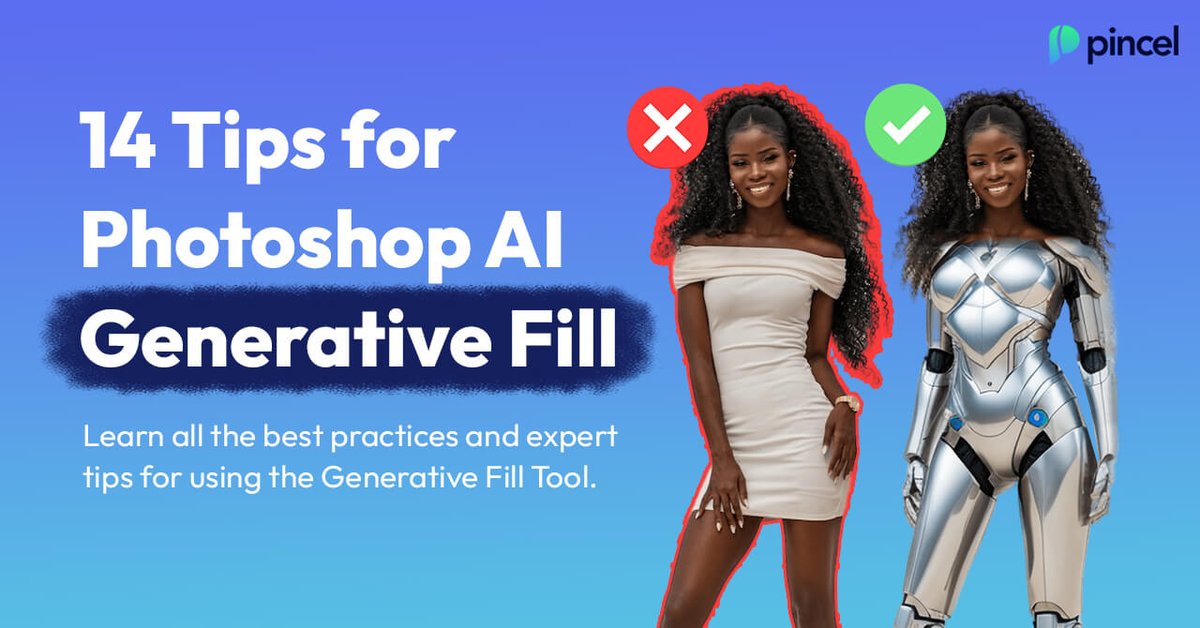
When the allure of powerful AI image editing collides with the frustration of unstable, "cracked" software, you're left looking for a better path forward. If you've found yourself asking, "Why isn't this working?" after trying to use a non-legitimate version of Generative Fill, you're not alone. This guide is for anyone exploring alternatives when cracked Generative Fill fails, seeking reliable tools that empower truly better AI edits.
The promise of AI-powered image manipulation is transformative: effortlessly adding objects, removing distractions, or expanding entire scenes with a simple text prompt. But when the software you're relying on is buggy, outdated, or flat-out won't cooperate, that promise quickly turns into a headache. The good news? A robust ecosystem of legitimate, high-quality generative AI tools exists, offering stable performance, cutting-edge features, and peace of mind.
At a Glance: Your Quick Guide to AI Editing Alternatives
- Generative Fill: An AI-powered inpainting/outpainting tool that uses text prompts to add, remove, or extend image content, automating complex edits.
- Why Cracked Versions Fail: Often due to lack of updates, security vulnerabilities, instability, and limited access to the latest AI models.
- Benefits of Legitimate Alternatives: Consistent performance, security, access to the newest features, and ethical use rights.
- Key Decision Criteria: Consider ease of use, quality, customization, cost, and platform compatibility (web, desktop, mobile).
- Top Alternatives to Explore: Photoroom, legitimate Adobe Photoshop (with Firefly), Pincel, Midjourney (Vary Region), DALL-E, and emerging open-source projects like Open Generative Fill.
- Your Next Step: Evaluate your specific editing needs, explore free trials, and invest in a solution that fits your workflow and budget for reliable results.
The Allure and The Letdown: Understanding Generative Fill's Power (and Why Cracked Versions Stumble)
Generative Fill, especially the version pioneered by Adobe, has revolutionized image editing. At its core, it's an AI-powered inpainting and outpainting tool. Think of inpainting as digitally "filling in" a selected area of an image with new content, while outpainting extends the image beyond its original boundaries, intelligently generating new surroundings. Both processes use sophisticated AI models to understand your image's context, perspective, lighting, and style, then synthesize new pixels that blend seamlessly.
Historically, altering images this way was a painstaking manual process, demanding hours from skilled artists. Today, with Generative Fill, you can describe what you want—"add a fluffy white cloud," "remove that person," "extend the background with a futuristic city"—and the AI gets to work in seconds. This speed, flexibility, and precision unlock incredible creative possibilities, saving immense time and reducing the cost barrier to high-quality image manipulation.
The Appeal of AI-Powered Editing:
- Unleashed Creativity: Imagine complex scenes or quick object removals taking mere moments.
- Time Savings: Automating tasks that traditionally required hours of manual work.
- Precision & Quality: AI understands image content at a granular level, producing highly realistic results.
- Cost-Effectiveness: Making professional-grade editing accessible without needing specialized human expertise for every tweak.
However, many users, tempted by the promise of free access, have tried to access these tools through "cracked" or unofficial versions. While the initial draw is understandable, this path often leads to significant frustration and unreliable outcomes. If you've ever tried to activate Generative Fill in an unofficial setup, you've likely encountered issues ranging from non-functional features to complete software crashes.
Why Cracked Generative Fill Often Fails:
- Lack of Updates: Generative AI models are constantly evolving. Cracked software can't receive the crucial updates needed to keep pace, leaving you with outdated, less capable versions of the AI. Features might be disabled or simply won't work as intended because they rely on server-side computations that aren't accessible.
- Security Risks: Unofficial software often comes bundled with malware, viruses, or spyware. This isn't just an inconvenience; it can compromise your entire system, leading to data theft or other serious security breaches.
- Instability and Bugs: Cracked programs are inherently unstable. They haven't gone through proper quality assurance and are often poorly patched, leading to frequent crashes, corrupted files, and unpredictable behavior.
- Limited Functionality: Key features, especially those requiring cloud-based AI processing (like Adobe Firefly powering Generative Fill), simply won't function without a legitimate connection to the developer's servers. You might get a shell of the intended tool, not its full power.
- Ethical and Legal Concerns: Using cracked software infringes on intellectual property rights. Beyond the legal ramifications, it undermines the creators who invest heavily in developing these advanced tools.
- No Support: When things go wrong (and they will), you're entirely on your own. There's no customer support, no community forums for legitimate troubleshooting, and no official documentation to help you fix issues.
In essence, using a cracked version is like buying a high-performance sports car without an engine—it looks the part, but it won't take you anywhere reliably. For genuine productivity and creativity, you need robust, officially supported tools.
Why You Need Reliable AI Editing Alternatives
Stepping away from the pitfalls of cracked software opens the door to a world of reliable, feature-rich, and secure AI editing tools. Investing in legitimate alternatives isn't just about avoiding problems; it's about embracing a superior editing experience that consistently delivers.
- Consistent Performance: Official tools are designed to work. They undergo rigorous testing and are regularly updated to fix bugs and improve stability. This means fewer crashes, fewer lost edits, and a smoother workflow.
- Access to Cutting-Edge AI Models: Generative AI is arguably the fastest-evolving tech field. Legitimate subscriptions grant you immediate access to the latest models, often before they're widely available. This means better quality, more nuanced edits, and new features as soon as they drop.
- Enhanced Security: Reputable software providers prioritize your security. They offer updates that patch vulnerabilities and ensure your data and intellectual property are protected.
- Full Feature Sets: Unlike cracked versions that often cripple cloud-dependent features, legitimate tools provide access to everything the developers intended, including advanced AI processing, cloud storage, and integrated workflows.
- Ethical and Commercial Use Rights: When you create with legitimate software, you typically have clear terms regarding the ownership and commercial use of your AI-generated assets. This is crucial for professionals who need to monetize their work without legal ambiguity.
- Dedicated Support and Community: Encounter a problem? Need help with a specific feature? Official users have access to customer support, extensive documentation, and vibrant user communities where you can find answers and share knowledge.
Moving to legitimate alternatives is a strategic decision that empowers your creativity and protects your digital ecosystem.
Decoding Your Options: What to Look for in an AI Inpainting Tool
The market for AI image editing tools is expanding rapidly. To find the best fit for your needs, consider these crucial factors:
1. Ease of Use & User Experience (UI/UX)
How intuitive is the interface? Can you quickly grasp how to make edits without a steep learning curve? Some tools are designed for beginners with simplified controls, while others offer more granular options for advanced users. Look for clear prompts, easy selection tools, and logical workflows.
2. Quality and Accuracy of Results
This is paramount. Does the AI generate realistic, seamless edits that match your image's style, lighting, and perspective? Evaluate how well it handles complex textures, shadows, and subtle details. Better underlying AI models (like Adobe Firefly or Photoroom's Instant Diffusion) generally produce superior results.
3. Customization and Control
Do you have enough control over the AI's output? Can you refine masks, provide detailed prompts, or generate multiple variations to choose from? More control means you can steer the AI closer to your vision, rather than settling for generic results.
4. Cost and Pricing Model
Options range from free tiers to monthly or annual subscriptions, and even credit-based systems.
- Free Tiers: Great for casual use or testing features, but often come with limitations (watermarks, lower resolution, fewer credits).
- Subscriptions: Offer full access for a recurring fee, ideal for regular users.
- Credit Systems: You pay for a certain number of AI operations, useful if your usage is sporadic.
Carefully weigh the features against the price for your specific usage patterns.
5. Integration and Platform Compatibility
Where do you prefer to work?
- Desktop Applications: Offer robust performance and offline capabilities (e.g., Photoshop).
- Web-Based Applications: Accessible from any browser, often mobile-friendly (e.g., Pincel, DALL-E Labs).
- Mobile Apps: Optimized for on-the-go editing (e.g., Photoroom).
- APIs: For developers who want to integrate AI editing into their own applications.
6. Specific Features
While many tools offer core inpainting/outpainting, look for specific features that align with your primary use cases:
- Object Removal: Seamlessly deleting unwanted elements.
- Background Generation/Replacement: Creating new backdrops or changing existing ones.
- Content Creation: Adding new objects or generating entire scenes from scratch.
- Image Extension (Outpainting): Expanding the canvas beyond the original image.
- Image Transformation: Altering lighting, atmosphere, or style.
By evaluating these factors, you can narrow down the choices and find an AI editing solution that truly elevates your workflow without the headaches of unsupported software.
Top Alternatives When Generative Fill Stumbles
When the official Adobe Generative Fill is unavailable or unreliable (especially if you're stepping away from a problematic "cracked" version), a wealth of excellent alternatives awaits. Each offers a unique blend of features, pricing, and user experience.
1. Photoroom: User-Friendly Powerhouse for Mobile and Web
Photoroom is rapidly emerging as a favorite, particularly for its user-friendly interface and strong mobile integration. It blends traditional photo editing tools with cutting-edge generative AI capabilities, making complex tasks surprisingly simple.
- Key Strengths:
- Intuitive Interface: Designed for ease of use, making AI inpainting accessible even for beginners.
- "Retouch" for Object Removal: Its dedicated retouch feature excels at seamlessly deleting unwanted objects or blemishes.
- Future "AI Fill": Photoroom is developing an "AI Fill" feature for replacing objects via text prompts, expanding its generative capabilities.
- Powered by Photoroom Instant Diffusion: Uses its own foundational Gen AI model for high-quality results.
- Strong Mobile Presence: Excellent for on-the-go editing.
- Use Cases: Quick product photo cleanups, social media content creation, personal photo enhancements.
- Pricing: Free plan available with limitations. Premium plans start at $12.99 USD/month or $89.99 USD/year, with API plans for businesses.
2. Adobe Photoshop's Generative Fill (Legitimate Version): The Industry Standard
Yes, the legitimate version of Adobe Photoshop with Generative Fill (powered by Adobe Firefly) remains the benchmark for many, especially if you're already familiar with Photoshop's ecosystem. If you've struggled to activate Generative Fill in an unofficial setup, switching to a legitimate subscription provides access to the full, stable, and frequently updated tool.
- Key Strengths:
- Deep Integration: Seamlessly works within the comprehensive Photoshop environment.
- Powered by Adobe Firefly: Adobe's dedicated generative AI model, known for high-quality, commercially safe outputs.
- Versatile: Capable of adding, removing, expanding, or transforming image content with text prompts.
- Cross-Platform: Available on desktop, web, and iPad.
- Use Cases: Professional photo editing, graphic design, concept art, high-stakes commercial projects.
- Pricing: Photoshop only plans start at $29.99 USD/month (includes 500 generative credits). Full Creative Cloud plans (all apps) are $78.99 USD/month. A 7-day free trial is available.
3. Pincel: Budget-Friendly Web-Based Inpainting
Pincel offers a straightforward, web-based solution for AI inpainting, making it accessible from any device with a browser. It’s a compelling option if you need robust features without the premium price tag of a full creative suite.
- Key Strengths:
- Web-Based Convenience: No downloads required, compatible with mobile devices as a web app.
- Object Removal: Excellent for removing elements using simple brush strokes.
- AI Editor for Text-Based Edits: Offers text-to-image editing capabilities within specific regions.
- Budget-Friendly: A more affordable subscription compared to some competitors.
- Use Cases: Quick edits, content creation for social media, anyone needing a reliable web-based editor.
- Pricing: Starts at $19 USD/month or $96/year, with a one-day free trial to test its capabilities.
4. Midjourney (Vary Region & Remix Mode): For Generative Art and Iteration
Midjourney isn't a traditional inpainting tool in the same vein as Photoshop or Photoroom, but its "Vary (Region)" tool, combined with "Remix Mode," offers powerful regional editing for those working primarily with AI-generated art or wanting to modify specific parts of an image.
- Key Strengths:
- Generative Art Focus: Excels at creating unique, high-quality images from text prompts.
- "Vary (Region)": Allows users to select a specific area and regenerate it with a new prompt, effectively adding or changing elements.
- "Remix Mode": Enables more controlled modifications by blending original elements with new prompts.
- Community-Driven: Operates within Discord, fostering a vibrant user community.
- Use Cases: Concept art, creative visual development, iterative design, generating complex scenes with specific modifications.
- Limitations: Requires a Discord account. Can have a steeper learning curve compared to dedicated inpainting tools. Less direct for simple object removal unless framed as a regeneration task.
- Pricing: Currently in Beta. Basic plan starts at $8/month, Standard at $24/month, and Pro at $48/month.
5. DALL-E (by OpenAI): Text-to-Image with Inpainting Capabilities
OpenAI's DALL-E is a pioneer in text-to-image generation and offers impressive image editing capabilities, particularly through its "Generation Frame" feature and integration with ChatGPT.
- Key Strengths:
- Powerful Text-to-Image: Generates highly creative and diverse images from text instructions.
- "Generation Frame" for Inpainting: Allows users to select an area within an uploaded image and infill it with new content based on a text prompt.
- ChatGPT Integration: Accessible directly through ChatGPT Plus, making the editing process conversational.
- Accessibility: Available via the online Labs tool (desktop) or through ChatGPT.
- Use Cases: Brainstorming visual concepts, quick image alterations, generating unique content from scratch, adding creative elements to existing photos.
- Pricing: A free plan is often bundled with ChatGPT. ChatGPT Plus, which includes DALL-E access, costs $20/month.
6. Exploring Open-Source Paths: Open Generative Fill and Beyond
For the more technically inclined or those committed to open-source principles, projects like "Open Generative Fill" represent a fascinating alternative. This early-stage repository aims to create a fully open-source solution for text-based image editing.
- What is "Open Generative Fill"?
Authored by Raha, Ritwik, and Roy Gosthipaty, Aritra in 2024, this project focuses on providing a framework to edit an image based on a given textedit_prompt. It's a testament to the community's desire for accessible, transparent AI tools. - How It Works (Proposed Methodology):
- Input: Takes an
edit_prompt(e.g., "replace the cat with a dog") and animage. - Image Captioning: A Vision Model captions the original image to understand its content.
- Prompt Analysis: A Language Model extracts the "source entity" (e.g., "cat") from your
edit_prompt. - Replacement Caption: A new caption is created by swapping the source entity with the target entity (e.g., "a dog") in the original image's caption.
- Segmentation Mask: Tools like OWL-VIT and SAM generate a precise mask around the source entity.
- Inpainting: Finally, image inpainting is performed using the generated mask and the
replacement_caption.
- Current Status & Potential:
"Open Generative Fill" is still in its early development stages, with current tasks focused on improving captioning, enhancing prompt upsampling, and optimizing the end-to-end pipeline. While not yet a plug-and-play solution for the average user, it showcases the potential of collaborative development in AI. - Benefits of Open Source:
- Transparency: You can see exactly how the AI works, fostering trust and understanding.
- Community-Driven: Development is often fueled by a global community of contributors, leading to rapid innovation.
- Customization: Advanced users can modify and adapt the code to their specific needs.
- Cost-Effective: Often free to use, though it may require computational resources or technical expertise.
- Challenges:
- Technical Skill Required: Open-source tools often demand more technical knowledge to set up and operate.
- Ongoing Development: Features may not be as polished or comprehensive as commercial alternatives, and development timelines can be unpredictable.
- Support: Community support is available, but not always as immediate or structured as commercial customer service.
For developers, researchers, or power users comfortable with a bit of coding, open-source projects like Open Generative Fill offer an exciting glimpse into the future of democratized AI editing, providing true independence from proprietary systems.
Making the Switch: Practical Steps for Better AI Edits
Deciding to move away from unreliable software is the first step. Here's how to navigate the alternatives and find your perfect match:
- Assess Your Core Needs:
- What are you editing most often? (e.g., product photos, personal memories, social media graphics, concept art).
- What specific features are non-negotiable? (e.g., precise object removal, full background generation, outpainting, text-to-image creation).
- What's your technical comfort level? (e.g., beginner, intermediate, advanced/developer).
- Take Advantage of Free Trials and Free Tiers:
Most commercial alternatives offer free trials (like Adobe's 7-day trial or Pincel's one-day trial) or generous free tiers (like Photoroom's basic plan or DALL-E's free access via ChatGPT). Use these to test the waters. Upload images, try your typical edits, and see how the AI performs for your specific workflow. Don't be afraid to try a few different options before committing. - Consider Your Workflow and Ecosystem:
- Do you need a tool that integrates with other software you use (e.g., a full Adobe Creative Cloud suite)?
- Do you primarily edit on desktop, web, or mobile?
- Do you need cloud storage or collaboration features?
- For example, if you're already deeply embedded in Adobe products, a legitimate Photoshop subscription might be the most seamless transition, allowing you to access Generative Fill consistently where you previously might have struggled to activate Generative Fill in unofficial versions.
- Invest in Legitimacy:
While the initial cost might seem like a barrier, legitimate software offers invaluable benefits: stability, security, continuous updates, and customer support. The time saved from troubleshooting bugs, the peace of mind regarding security, and the access to the latest AI innovations often far outweigh the subscription fee. Think of it as investing in a reliable tool that empowers your creativity rather than hindering it.
Common Questions About AI Image Editing
As you dive deeper into the world of AI editing, you're bound to have questions. Here are some common ones, answered concisely:
"Is free always worse when it comes to AI editing?"
Not necessarily "worse," but usually more limited. Free tiers or open-source solutions can be excellent for specific tasks, learning, or casual use. However, they often come with restrictions like lower resolution, watermarks, slower processing, fewer features, or a steeper technical learning curve compared to paid professional tools.
"Can AI generative tools handle truly complex scenes or specific brand guidelines?"
Modern AI models are incredibly advanced, capable of generating highly detailed and contextually appropriate content. However, for extremely complex scenes or strict brand guidelines, you'll still need human oversight and refinement. AI is a powerful assistant, not a fully autonomous art director. Many tools offer parameters and negative prompts to guide the AI more precisely.
"What about image rights and commercial use for AI-generated content?"
This is a critical area. Most reputable commercial AI tools (like Adobe Firefly, Photoroom, DALL-E) provide clear terms regarding the commercial use of assets generated with their software. Adobe, for instance, trains Firefly on licensed content, ensuring commercial safety. Always review the terms of service for any tool you use, especially if you plan to monetize your creations. Open-source models often have more permissive licenses, but user discretion is still advised.
"How quickly do these AI tools improve?"
Rapidly! Generative AI technology is evolving at an unprecedented pace. What was cutting-edge six months ago might be standard today. This rapid improvement is why using legitimate, updated software is so crucial—you automatically benefit from these advancements, getting better quality and new features without additional effort.
Moving Forward with Confidence: Your Next Steps in AI Editing
The journey from struggling with unreliable software to confidently creating with powerful AI tools is well within reach. By understanding the core capabilities of generative fill, recognizing the limitations of unofficial versions, and exploring the diverse landscape of legitimate alternatives, you can empower your creative workflow like never before.
Don't let the frustration of a failing cracked program deter you from the incredible potential of AI image editing. Instead, view it as an opportunity to upgrade your tools and embrace stability, security, and cutting-edge features. Dive into the free trials, compare the options against your specific needs, and make an informed choice that will genuinely enhance your digital artistry. The future of editing is here, and it's built on reliable, robust, and ethical foundations.